
Why Process Capability Matters More Than Final Inspection for OEM Custom Parts
Final inspection can catch defects before shipment, but it cannot make an unstable process reliable. For OEM buyers, the real question is whether the factory can keep critical dimensions, finish and assembly performance stable before parts reach the last inspection table.
Many sourcing conversations start with one question: will the supplier inspect the parts before shipment? That question is important, but it is not enough for custom metal parts, plastic components or automotive accessories that must repeat across batches.
A final inspection report tells the buyer what was found at the end. Process capability tells the buyer whether the manufacturing route is likely to keep producing acceptable parts during the run.
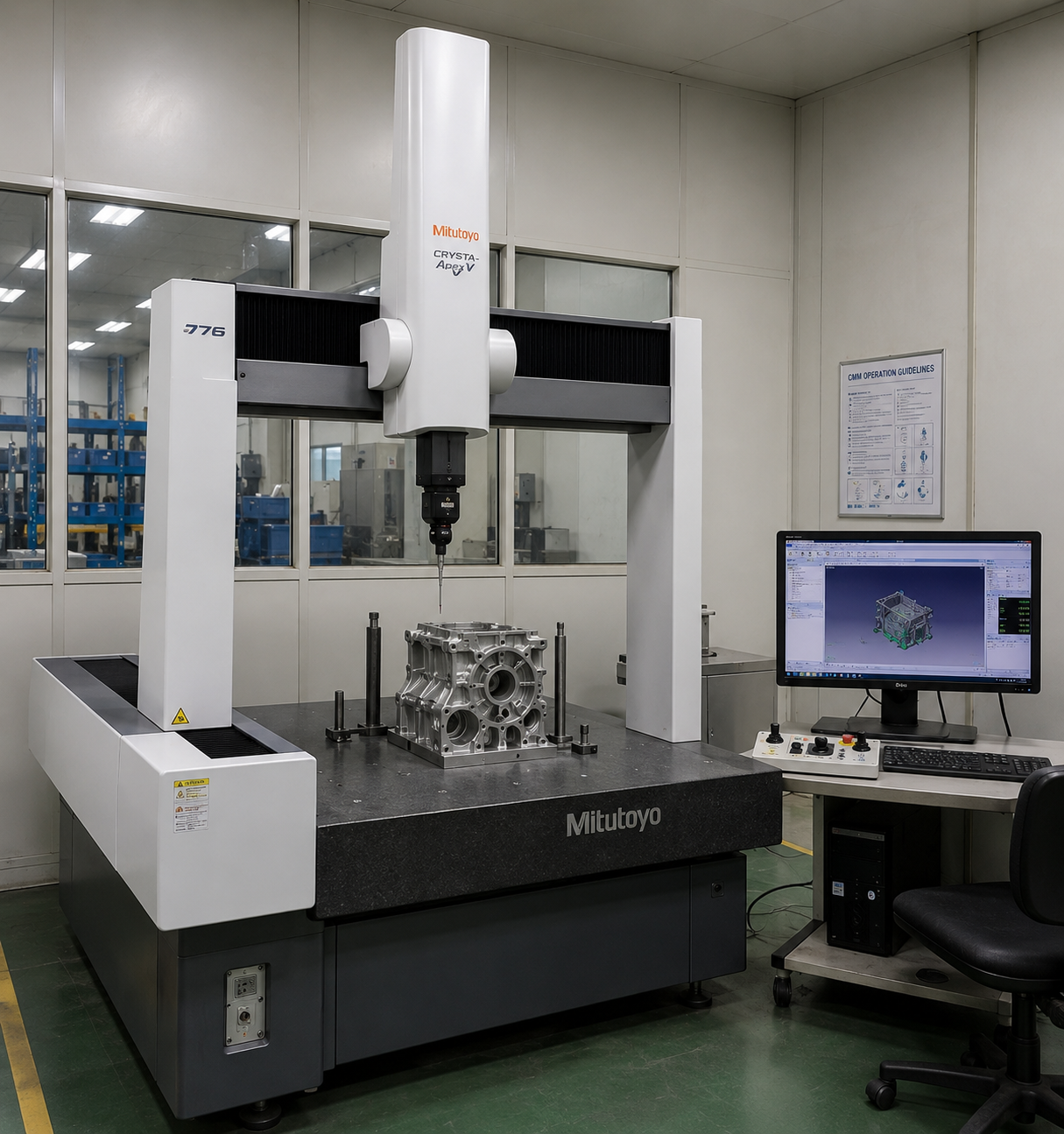
Quick Answer: Final Inspection Finds Problems, Process Capability Prevents Them
Process capability matters more than final inspection because OEM buyers need repeatable production, not only sorted shipments. A capable process controls material, machines, fixtures, tooling, operators, inspection points and reaction plans before defects build up across a batch.
Why This Topic Is Getting More Attention
Automotive supply chains are putting more pressure on suppliers to control variation earlier in production. In July 2026, AIAG and VDA announced a harmonized SPC manual for the automotive industry, reinforcing a wider move toward consistent statistical process control across global supplier networks. For buyers, the practical takeaway is simple: quality evidence is moving closer to the process, not staying only at final inspection.
Factory Scenario: A Batch That Passes at the End Can Still Be Risky
Imagine a machined aluminum housing with several critical holes. The supplier checks a sample at the end of production and the dimensions pass. But during the run, tool wear slowly moved one hole toward the tolerance limit. Final inspection may catch the worst pieces, but it may not explain when the drift started or how many borderline parts were packed.
In a stronger process, the factory watches the critical dimension during machining. If the measurement starts moving, the team can adjust the tool, check the fixture, pause the line or separate parts before the whole batch becomes a sorting job.
Final Inspection Has a Limit
Final inspection is necessary. It confirms finished parts before shipment and helps create buyer confidence. But final inspection usually happens after material has been consumed, machining time has been spent, surface treatment has been completed, assembly labor has been used and export packaging may already be prepared.
When a problem is found that late, the options are expensive: rework, remake, sort, delay shipment or ask the buyer to accept a deviation. That is why final inspection should be the last checkpoint, not the first meaningful quality control step.
What Process Capability Means in Plain Factory Terms
Process capability is the factory’s ability to make parts within the required specification repeatedly. It is not only a number on a report. It is also the discipline behind the number: stable machines, controlled tooling, clear drawings, fixtures that locate parts correctly, trained operators and inspection points placed where variation can be caught early.
For CNC machining, the concern may be hole position, bore size, flatness or surface roughness. For injection molding, it may be shrinkage, flash, color, strength or assembly fit. For metal surface finishing, it may be coating thickness, color consistency, corrosion expectation or cosmetic defect limits.
SPC Is Useful When the Buyer Knows What Is Critical
Statistical process control is most useful when the buyer and factory agree which characteristics are critical. Not every dimension needs the same level of monitoring. The most important dimensions are usually the ones that affect fit, function, safety, assembly, sealing, movement or visible customer experience.
Before production, buyers can help by marking critical-to-quality dimensions on drawings and explaining how the part will be used. This makes the factory review more practical and helps avoid inspecting the wrong things carefully while missing the real risk.
Questions Buyers Should Ask Before Mass Production
- Which dimensions or features are considered critical to quality?
- How will the factory check the first parts after setup?
- Where are in-process inspection points placed during production?
- What happens if a dimension starts moving toward the tolerance limit?
- Which tools, gauges or machines will be used for measurement?
- How are fixture wear, tool wear and operator changes controlled?
- How will records be kept for repeat production?
- How is the approved sample used as a reference for later batches?
Why Process Capability Also Affects Cost
A capable process may not always create the lowest first quote, but it can reduce hidden cost. Stable production means less sorting, less rework, fewer urgent replacements and fewer arguments about whether a part should have passed.
This connects directly with supplier comparison. A buyer comparing only unit price may choose a supplier that inspects at the end but does little to control the process. That can create the same problem discussed in why the cheapest OEM supplier can increase warranty cost.
How Nbfeiyu Looks at Process Control
Nbfeiyu supports OEM/ODM manufacturing for custom metal and plastic components, automotive accessories and assembled products. The factory operates 20 production lines, with quality control staff supervising each line to support consistent production.
For buyer projects, process review may include drawing checks, sample approval, material confirmation, machining or molding route planning, surface treatment coordination, assembly checks and final inspection. The aim is to make the approved standard repeatable, not only to find defects at the end.
What Buyers Should Include in the RFQ
If process capability matters for the project, the RFQ should not only include drawings and target price. It should also explain annual volume, critical dimensions, function, finish expectation, assembly relationship, testing requirement and any customer-specific inspection needs.
A complete RFQ helps the factory plan the right controls before quoting. For more detail, see Nbfeiyu’s complete RFQ package guide for custom metal parts.
FAQ
Does final inspection still matter?
Yes. Final inspection is still necessary before shipment. The point is that final inspection should confirm a controlled process, not replace process control.
Is SPC required for every custom part?
No. The level of control should match the product risk, tolerance, volume and application. Critical dimensions and repeat production programs need more structured monitoring than simple low-risk parts.
What should buyers ask if they are not quality engineers?
Ask the supplier which features are hardest to control, how they check the first pieces, what they monitor during production and what they do when measurements start drifting. These questions often reveal more than a generic final inspection promise.
Conclusion
Final inspection is important, but it is too late to be the only quality plan. For OEM custom parts, real stability comes from understanding the process, controlling variation and reacting before defects become a shipment problem.
When buyers ask about process capability early, they usually receive better quotations, better samples and fewer surprises during mass production.
Buyer Checklist
- Define the part function and critical features.
- Confirm material, quantity, tolerance and finish.
- Agree sample approval and inspection standards.
- Record packaging and shipment requirements.
Need Help With a Custom Manufacturing Project?
Send drawings, samples, materials, quantity, tolerance, finishing, inspection and packaging requirements. Nbfeiyu can review manufacturability, process route, quality checkpoints and quotation details before production.