
What Is First Article Inspection for Custom Metal Parts?
Executive Summary
First Article Inspection, often called FAI, is the process of inspecting the first production sample of a custom metal part before full batch production begins. For procurement managers, FAI is a practical risk-control step. It verifies that the supplier understands the drawing, uses the correct material, follows the approved process, and can meet dimensional and finishing requirements. FAI is especially important for CNC machined parts, welded assemblies, laser cut components, and OEM parts with tight tolerances or critical fit. A proper FAI report should include a ballooned drawing, dimensional results, material confirmation, finish confirmation, inspection method, and approval status.
Direct Answer
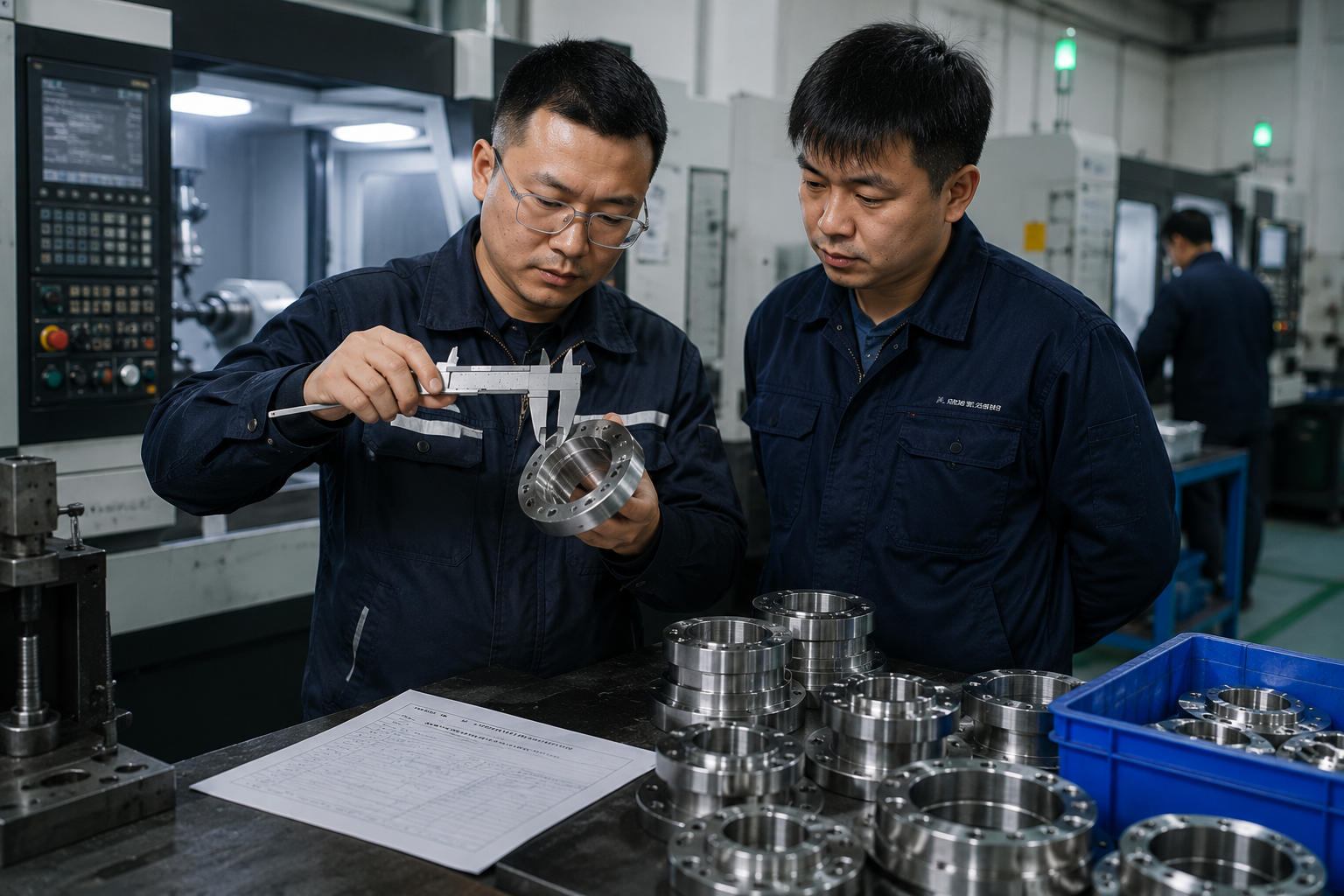
First Article Inspection is a documented inspection of the first manufactured part or sample from a new production process. It confirms whether the part meets drawing and specification requirements before mass production continues.
FAI is used when:
- A new part is produced
- A drawing is revised
- A new supplier is approved
- A new tool, fixture, or process is used
- Production restarts after a long pause
- Critical dimensions must be verified
Why FAI Matters
Without FAI, a supplier may produce an entire batch before discovering that a dimension, material, finish, thread, or tolerance was misunderstood. For OEM buyers, that can create rework, shipment delays, and assembly problems.
FAI helps reduce:
- Drawing interpretation errors
- Wrong material risk
- Fixture setup mistakes
- Tolerance failures
- Surface finish problems
- Batch-level rejection
- Costly production delays
What an FAI Report Includes
| FAI Element | Purpose |
|---|---|
| Part name and number | Identifies the part |
| Drawing revision | Confirms correct drawing version |
| Ballooned drawing | Links dimensions to inspection results |
| Material confirmation | Verifies correct material |
| Dimensional results | Shows measured values |
| Inspection method | Identifies tools used |
| Surface finish check | Confirms finish requirement |
| Notes or deviations | Records exceptions |
| Approval status | Confirms production readiness |
FAI for CNC Machined Parts
For CNC machining, FAI should verify critical features such as hole locations, thread quality, flatness, perpendicularity, surface roughness, and tight fits.
Related resource: CNC Machining
FAI for Fabricated and Welded Parts
For welded or fabricated parts, FAI may include overall dimensions, hole alignment, weld location, weld appearance, fixture repeatability, and assembly fit.
Related resource: Welding & Fabrication
Procurement Best Practices
- Request FAI before batch production.
- Define critical dimensions in the RFQ.
- Provide the latest drawing revision.
- Ask for photos with the FAI report.
- Confirm material and finish at the same time.
- Do not approve mass production until FAI issues are closed.
Common Mistakes
Treating FAI as Optional
For new OEM parts, FAI should be part of the approval workflow.
Reviewing Only the Sample
A physical sample may look acceptable, but the FAI report shows whether dimensions and requirements were actually checked.
Not Controlling Revisions
FAI must match the current drawing revision. If the drawing changes, a partial or full FAI may be needed again.
FAQ
Is FAI required for every order?
Not always. FAI is most important for new parts, revised parts, new suppliers, or changed production processes.
Who approves the FAI?
Usually the buyer's engineering, quality, or procurement team approves FAI before production release.
Does FAI replace final inspection?
No. FAI confirms production setup. Final inspection still checks finished parts before shipment.
Can nbfeiyu provide FAI?
Yes. nbfeiyu can support first article inspection for CNC machining, laser cutting, welding, surface finishing, and assembly projects.
Quick Answer
The practical answer depends on the part function, material, quantity, tolerance, finishing and inspection requirements. A factory review before production helps convert those requirements into a controlled process.
Buyer Checklist
- Define the part function and critical features.
- Confirm material, quantity, tolerance and finish.
- Agree sample approval and inspection standards.
- Record packaging and shipment requirements.
Need Help With a Custom Manufacturing Project?
Send drawings, samples, materials, quantity, tolerance, finishing, inspection and packaging requirements. Nbfeiyu can review manufacturability, process route, quality checkpoints and quotation details before production.