
Aluminum Die Casting Engineering Guide
Aluminum Die Casting Services for Custom OEM Parts
Engineering review and manufacturing support for lightweight high-volume aluminum parts requiring tooling review, CNC finishing, coating, inspection, and repeat OEM production.
Engineering Process Review
Is Aluminum Die Casting the Right Manufacturing Process for Your Product?
Aluminum die casting is suitable for lightweight, high-volume, repeatable aluminum housings, covers, brackets, bases, heat sink bodies, and structural components.
But it is not always the best process. NBFEIYU will review geometry, wall thickness, draft, tooling cost, annual volume, machining areas, surface finish, and quality risk before recommending die casting.
If aluminum die casting is not suitable, we can compare CNC machining, extrusion, investment casting, stamping, sand casting, or fabrication before tooling begins.
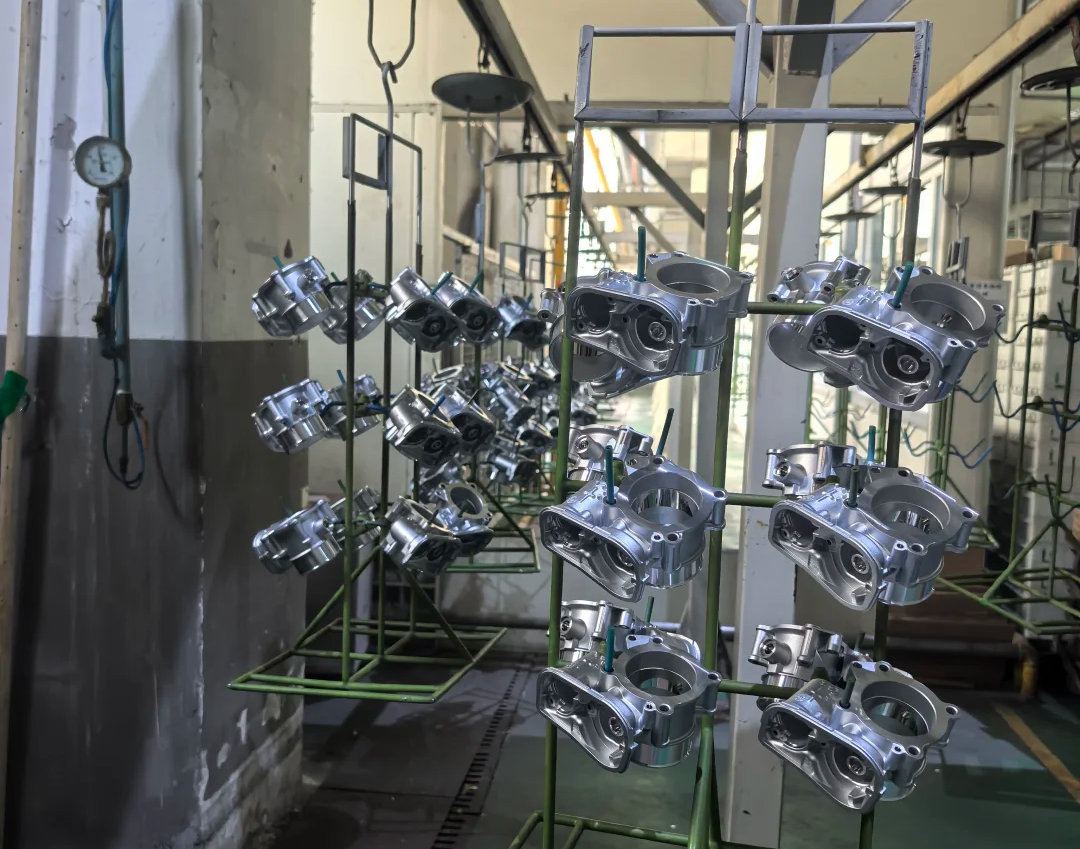
Manufacturing Decision Guide
When This Process Makes Sense
| If Your Part Needs... | Recommended Route |
|---|---|
| Lightweight high-volume metal housing | Aluminum die casting |
| Threads, bearing areas, or sealing faces | Aluminum die casting + CNC machining |
| Outdoor color or corrosion resistance | Aluminum die casting + powder coating, painting, or anodizing review |
| Low-volume prototype | CNC machining or rapid prototype first |
| Long constant aluminum profile | Compare with extrusion |
| Flat sheet part | Compare with metal stamping |
Alternative Process Review
When Aluminum Die Casting Is NOT the Best Choice
Die casting can reduce unit cost at volume, but the wrong process can increase tooling cost, machining risk, cosmetic problems, or lead time. NBFEIYU compares alternative routes before recommending production.
| Product Requirement | Better Process |
|---|---|
| Low-volume prototype | CNC Machining |
| Long constant profile | Aluminum Extrusion |
| Complex stainless or steel part | Investment Casting |
| Flat sheet metal bracket | Stamping / Sheet Metal Fabrication |
| Large heavy component | Sand Casting |
| Very high cosmetic surface | CNC Machining or alternative finishing review |
Process Comparison
Aluminum Die Casting vs Other Processes
Vs CNC Machining
- Best for
- High-volume aluminum housings and covers after tooling is justified.
- Not suitable for
- Early prototypes or very low-volume parts.
- Cost consideration
- Tooling cost is higher first, but unit cost can drop at volume.
- Production volume
- Medium to high volume.
- Engineering note
- Machined features, threads and sealing faces should be defined before tooling.
Vs Extrusion
- Best for
- 3D housings, covers, bases and structural bodies.
- Not suitable for
- Long constant profiles, rails or linear aluminum sections.
- Cost consideration
- Extrusion may be better when profile geometry is constant.
- Production volume
- Volume depends on tooling and machining requirements.
- Engineering note
- Review profile length, cross-section and machining areas.
Vs Investment Casting
- Best for
- Aluminum parts needing repeatable die-cast production.
- Not suitable for
- Complex stainless steel or steel cast parts.
- Cost consideration
- Investment casting may fit lower-volume complex steel parts.
- Production volume
- Depends on material, geometry and tolerance.
- Engineering note
- Material selection is the first decision point.
Vs Stamping
- Best for
- Thicker 3D aluminum bodies, bases and enclosures.
- Not suitable for
- Flat sheet brackets, clips or covers.
- Cost consideration
- Stamping is often more economical for flat sheet metal parts.
- Production volume
- Both can fit high volume after tooling review.
- Engineering note
- Wall thickness and 3D geometry drive the decision.
Vs Sand Casting
- Best for
- Repeatable smaller to medium aluminum parts.
- Not suitable for
- Large heavy components or very large casting envelopes.
- Cost consideration
- Sand casting may be better for large parts and lower tooling pressure.
- Production volume
- Sand casting often fits lower volume or large parts.
- Engineering note
- Review part size, wall thickness and machining allowance.
Cost Optimization
Cost Optimization Examples
Solid aluminum block machining
Customer request: Machine aluminum housing from solid block.
Engineering recommendation: Aluminum die casting + CNC finishing.
- Lower material waste
- Less machining time
- Better repeatability
- Lower unit cost after tooling investment
Multi-piece fabricated housing
Customer request: Fabricated aluminum housing.
Engineering recommendation: One-piece aluminum die casting.
- Fewer assembly steps
- Better consistency
- Cleaner appearance
- Easier repeat production
Surface finish rejected late
Engineering route: Early coating and masking review
Customer benefit: Reduces finishing rework and appearance risk.
Design Guidelines
Design Considerations for Buyers and Engineers
| Design Item | Recommendation |
|---|---|
| Uniform wall thickness | Reduce shrinkage and filling issues by avoiding abrupt thickness changes. |
| Draft angle | Add draft to support tooling release and stable production. |
| Ribs | Use ribs instead of thick sections for strength and stiffness. |
| Machining allowance | Define stock for holes, threads, datum faces, and sealing surfaces. |
| Ejector and gate marks | Confirm acceptable cosmetic and non-cosmetic surfaces. |
| Surface treatment | Define coating, color, masking, and corrosion requirements early. |
Tooling Risk Review
Tooling Review Before Production
Tooling decisions affect cost, cosmetic surfaces, machining allowance and repeat production quality. NBFEIYU reviews these risks before tooling starts.
Surface Treatment Planning
Surface Treatment for Aluminum Die Cast Parts
Aluminum die cast parts often require powder coating, painting, polishing, laser marking, or other surface finishing. Surface finish, masking areas, cosmetic surfaces, and coating requirements should be reviewed before tooling.
Review Before Tooling
Applications
Typical Custom OEM Parts
Manufacturing Workflow
From Drawing Review to Export Delivery
Each project starts with engineering review so the selected route supports tooling cost, unit cost, tolerance, surface finish, quality control, and repeat production requirements.
Quality Control
Quality Control for Die Cast Parts
Quality control starts from DFM and tooling review, then continues through sample validation, casting inspection, machining inspection, surface review, and final shipment approval.

Why NBFEIYU
Why Choose NBFEIYU for This Process?
Aluminum Route Review
We confirm if aluminum die casting is better than CNC machining, extrusion, stamping, or fabrication.
Tooling-Aware DFM
Draft, wall thickness, ribs, gates, ejector marks, and machining allowance are reviewed before tooling.
Machining and Finishing
CNC machining, tapping, deburring, coating, and marking can be integrated.
Repeat Production
Suitable for repeated OEM orders needing stable dimensions, finish, packaging, and delivery.
Related Processes
Explore Related Die Casting and Manufacturing Services
Engineering Review CTA
Upload Your Drawing for Engineering Review
Send us your drawing, 3D file, material, quantity, tolerance, surface finish, and application requirements. Our team will review the die casting route, tooling risk, machining strategy, cost optimization opportunities, lead time, quality risks, and quotation.
Customer Receives
FAQ
Aluminum Die Casting Custom OEM Parts FAQ
When should I choose aluminum die casting?
Choose aluminum die casting when your product needs a lightweight aluminum body, repeatable production, stable geometry and lower unit cost after tooling investment.
When should I not choose aluminum die casting?
Do not choose it automatically for low-volume prototypes, long constant profiles, flat sheet metal brackets, large heavy castings or very high cosmetic surfaces without engineering review.
Is aluminum die casting suitable for low-volume production?
Usually CNC machining is better for low-volume prototypes because die casting requires tooling investment. Die casting becomes more attractive when annual volume can justify tooling.
Aluminum die casting vs CNC machining: which is better?
CNC machining is often better for prototypes and low-volume precision parts. Aluminum die casting can reduce waste and unit cost for repeat production, with CNC finishing for critical areas.
Aluminum die casting vs extrusion: which is better?
Extrusion is better for long constant profiles. Aluminum die casting is better for 3D housings, covers, brackets, bases and structural components with more complex geometry.
Can aluminum die cast parts be CNC machined?
Yes. Threads, holes, datum faces, bearing areas, sealing surfaces and precision assembly features are commonly CNC machined after die casting.
Can aluminum die cast parts be anodized?
Some die cast aluminum parts can be anodized, but cosmetic results depend on alloy, porosity and surface requirements. Powder coating, painting or other finishes may be more suitable.
Can aluminum die cast parts be powder coated?
Yes. Powder coating is commonly used for aluminum die cast parts when corrosion protection, color or durable surface appearance is required.
What tooling risks should be reviewed before die casting?
Draft angle, wall thickness, gate and ejector mark location, machining allowance, cosmetic surfaces, shrinkage, porosity risk and surface treatment compatibility should be reviewed before tooling.
Can NBFEIYU recommend another process if die casting is not suitable?
Yes. We can compare CNC machining, extrusion, investment casting, stamping, sheet metal fabrication or sand casting based on geometry, volume, material, tolerance and cost target.