
When buyers ask suppliers for quality support, they often request final inspection photos or a pre-shipment report. Those documents matter, but they do not explain how the factory will prevent defects during the run.
A control plan is different. It answers a more useful question: what will the factory check, when will it check it, who is responsible and what happens when something moves outside the approved range?
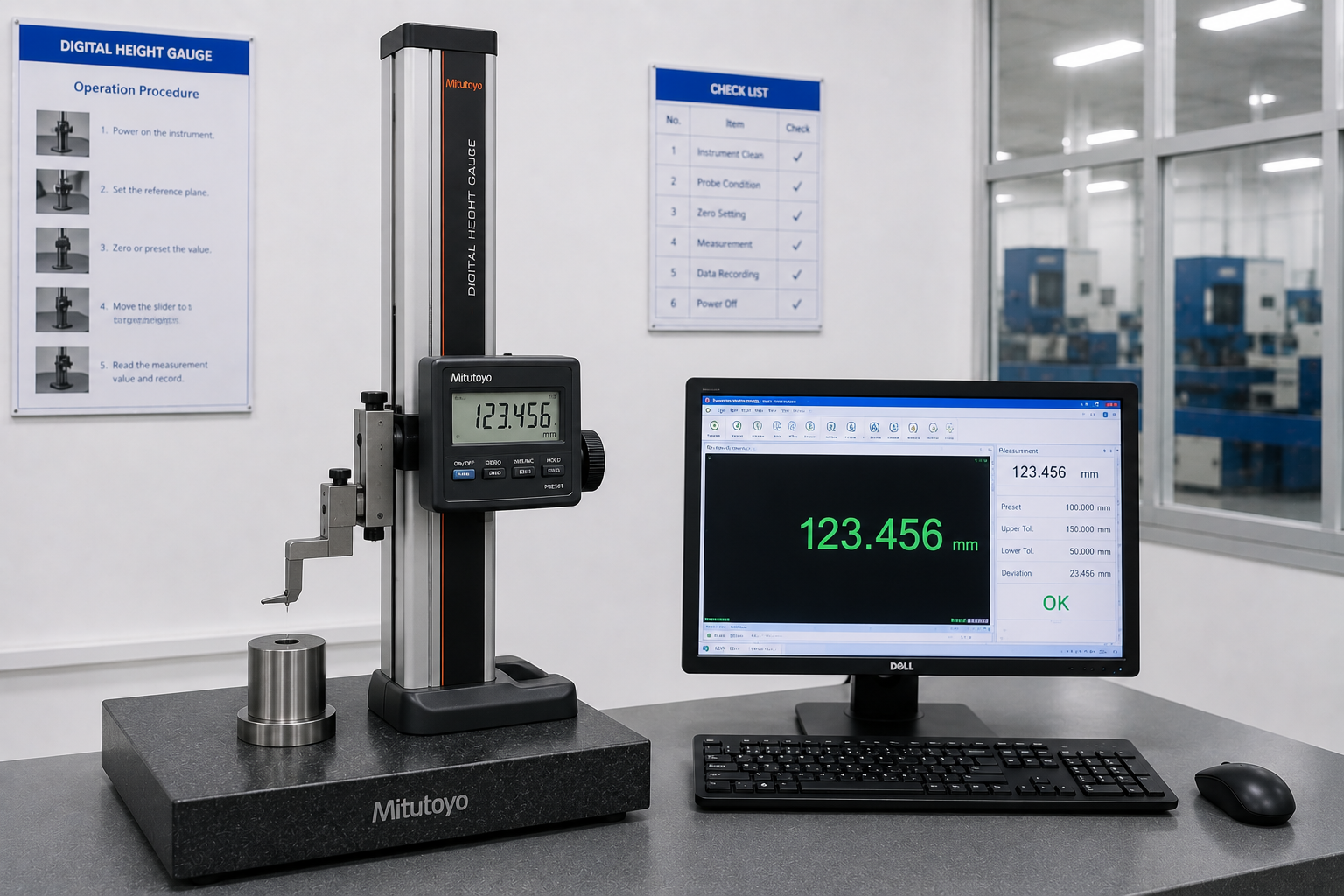
Quick Answer: A Control Plan Turns Quality Promises Into Checkpoints
OEM buyers should check whether the supplier’s control plan covers critical dimensions, incoming materials, machine setup, in-process inspection, surface treatment, assembly, packaging, final inspection and reaction plans. A useful control plan should be specific enough for repeat production, not just a generic quality statement.
Factory Scenario: The Drawing Is Clear, but the Process Is Not
A buyer sends a detailed drawing for a machined component. The supplier confirms that final inspection will be done before shipment. On paper, that sounds acceptable. But the drawing has two holes that control assembly fit, one surface that must remain clean after finishing and a packaging requirement that protects a visible face.
If those points are not built into the control plan, the factory may inspect the part too late or check the easy dimensions while missing the features that create real customer complaints.
1. Start With Critical-to-Quality Features
The first part of a control plan should identify critical-to-quality features. These may include hole position, bore size, flatness, thread quality, surface roughness, coating thickness, color, assembly torque, label position or packaging layout.
Buyers can help by marking critical dimensions and explaining where the part fits in the final product. This connects directly with factory drawing review before quotation.
2. Confirm Incoming Material Checks
A control plan should not begin after machining or molding. Material quality affects every later step. For aluminum, steel, PP plastic, brass or combined components, the buyer should know how the supplier confirms grade, supplier source, certificates or incoming inspection requirements when needed.
If the material assumption changes, the process capability, surface finish, strength and assembly result may change as well.
3. Define Setup and First Article Checks
Before mass production starts, the factory should confirm that the setup can produce parts according to the approved standard. This may include tool offset checks, fixture confirmation, first-piece measurement, appearance review and assembly fit verification.
For projects with tight tolerances or repeat orders, first article inspection creates a useful bridge between sample approval and production release. Related guide: first article inspection for custom metal parts.
4. Place Inspection Points Where Problems Can Be Stopped
Inspection should happen where it can still prevent batch loss. For machining, that may be after setup and during the run. For injection molding, it may be after parameter confirmation and during regular sampling. For surface treatment, it may include appearance, color, thickness or handling checks before packing.
The goal is to catch drift while production is still adjustable. That is why process capability matters more than relying only on final inspection.
5. Include Surface Treatment and Assembly Controls
Many defects appear after the main forming or machining process. A part may be dimensionally correct, then become risky during polishing, anodizing, electroplating, coating, assembly or packaging.
For visible or assembled products, the control plan should include surface acceptance standards, handling protection, assembly sequence, functional checks and packing method. Related pages: Surface Treatment and Assembly & Supply Chain.
6. Ask About Reaction Plans
A control plan is weak if it only says what will be inspected. Buyers should also ask what happens when a measurement fails, a finish defect appears, a fixture wears, a package is damaged or an operator finds an abnormal condition.
A practical reaction plan may include stopping production, separating affected parts, checking previous output, adjusting tooling, notifying quality staff or requesting buyer confirmation when a deviation affects approved requirements.
Buyer Checklist Before Approving Production
- Critical dimensions and features are clearly identified.
- Incoming material checks match the project risk.
- First article or setup inspection is defined.
- In-process inspection frequency is practical for the order volume.
- Measurement tools and inspection methods are named.
- Surface finish and assembly checkpoints are included when relevant.
- Packaging checks protect visible and functional surfaces.
- Reaction plans explain what happens when a problem appears.
How Nbfeiyu Uses Control Thinking in OEM Projects
Nbfeiyu supports OEM/ODM custom parts and automotive accessory projects from engineering review to production, inspection, assembly and shipment. The factory’s production system covers machining, molding, surface finishing and assembly, supported by quality control staff on production lines.
For buyers, the value is not a thick document. The value is a clear production route that can be checked, repeated and adjusted before defects reach the customer.
FAQ
Is a control plan only for automotive projects?
No. Automotive programs often use more formal control plans, but the thinking is useful for many OEM custom parts where repeat quality, fit, finish and delivery stability matter.
Should buyers request a control plan before quotation?
For simple parts, a full plan may not be needed at the quotation stage. For complex, high-volume or assembly-related parts, buyers should at least discuss critical checks before price comparison.
What is the difference between a control plan and final inspection?
Final inspection checks finished goods before shipment. A control plan defines how quality will be controlled throughout production, including material, setup, process, surface treatment, assembly and packing.
Conclusion
A control plan does not need to be complicated to be useful. It needs to be specific, practical and connected to the real risks of the part.
For OEM buyers, asking about the control plan before mass production is one of the simplest ways to reduce quality surprises, shipment delays and after-sales cost.