
Procurement teams often focus on price, lead time and final inspection. Inside a factory, however, many quality and delivery risks are decided earlier: during drawing review, process planning, material confirmation, inspection setup and production control.
This guide explains the topic from the factory side, so OEM buyers can ask clearer questions before committing to mass production.
Quick Answer
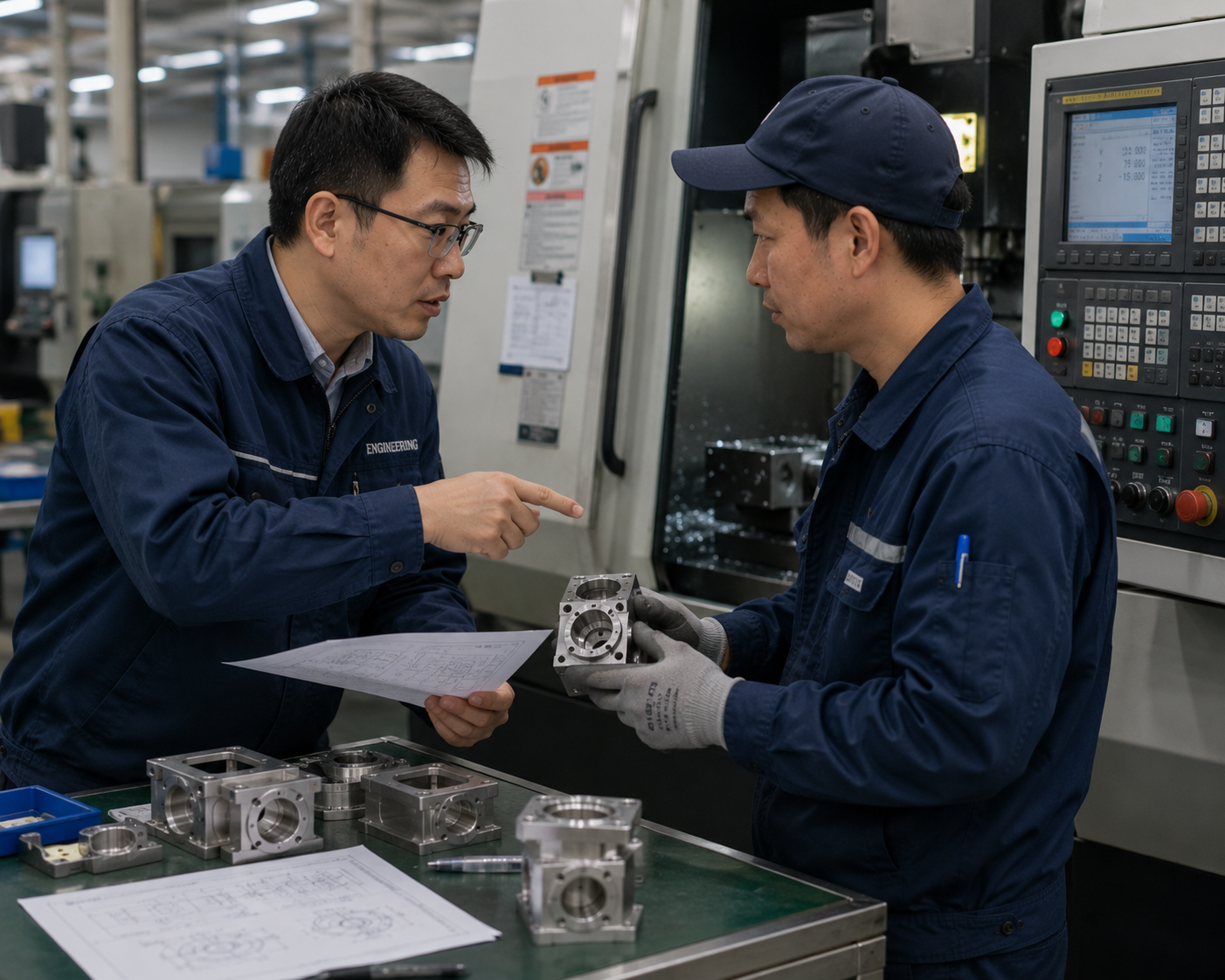
Engineering review reduces rework by checking whether the drawing can be manufactured, inspected, finished, assembled, packed and repeated before the factory commits to mass production.
Factory Scenario
A buyer sends a drawing with tight tolerances, a visible finish and an assembly requirement. The shape is manufacturable, but one tolerance is difficult to inspect, one edge may create coating problems and the packaging does not protect the finished face. If these issues are found after production, they become rework. If they are found during engineering review, they become questions to solve before launch.
Engineering Review Is Not Only Quotation
A good review checks risk before price is finalized. The factory should look at manufacturability, material, process route, tolerance stack-up, surface finish, assembly fit and inspection method.
Drawings Need Manufacturing Context
A drawing may be technically clear but still difficult to make repeatedly. Engineering review connects the drawing with machining, molding, welding, surface treatment, assembly and inspection realities. Related guide: how factories review drawings before quotation.
Samples Should Confirm More Than Dimensions
Samples should confirm appearance, function, assembly relationship, packaging and inspection standards. This avoids approving a part that looks acceptable but cannot be repeated efficiently in production.
Fixtures and Gauges Should Be Discussed Early
If the part needs repeat orders, fixtures and gauges may be needed to control position, assembly fit or functional checks. Waiting until production starts makes these decisions rushed.
Change Control Prevents Rework Later
If a buyer changes material, finish, tolerance or packaging after sample approval, the factory should review the impact before continuing. This protects schedule and quality.
Nbfeiyu Factory Angle
Nbfeiyu supports OEM/ODM projects through R&D, design, production, quality control and sales coordination. This closed-loop workflow helps connect buyer requirements with practical production planning before mass production.
Buyer Checklist
- Drawing risks are reviewed before quote confirmation.
- Critical dimensions and tolerance stack-up are discussed.
- Material and finish choices match the application.
- Sample approval includes fit, finish and packaging.
- Fixtures or gauges are considered for repeat orders.
- Inspection and reaction plans are clear before mass production.
FAQ
Is engineering review the same as DFM?
DFM is part of engineering review. A broader review also includes inspection, surface treatment, assembly, packaging and repeat production risk.
When should engineering review happen?
Before quotation is finalized, before sample approval and again before mass production if the design or requirement changes.
Can engineering review reduce unit cost?
Often yes. It can find simpler manufacturing routes, avoid unnecessary tolerances and reduce rework or sorting cost.
Conclusion
For OEM buyers, the safest supplier is not the one that only promises inspection at the end. It is the factory that can explain how risk is reviewed, controlled and corrected before products leave the production line.
Clear drawings, practical standards and early engineering communication help both sides reduce rework, protect delivery schedules and keep repeat orders stable.