
Procurement teams often focus on price, lead time and final inspection. Inside a factory, however, many quality and delivery risks are decided earlier: during drawing review, process planning, material confirmation, inspection setup and production control.
This guide explains the topic from the factory side, so OEM buyers can ask clearer questions before committing to mass production.
Quick Answer
Buyers should define corrosion testing by specifying material, surface treatment, test method, exposure expectation, acceptance criteria, sample preparation, inspection timing and whether the result is for validation or routine production control.
Factory Scenario
A buyer asks for a black finish and salt spray resistance. One supplier quotes a basic coating. Another assumes a stricter corrosion test. The prices are different because the requirement is not the same. Without a defined method and acceptance standard, both quotes may look comparable while the actual risk is very different.
Start With the Use Environment
Indoor decorative parts, outdoor accessories, coastal environments and high-handling products may need different corrosion expectations. The finish should be chosen for the real application, not only for appearance.
Test Method and Acceptance Must Be Written
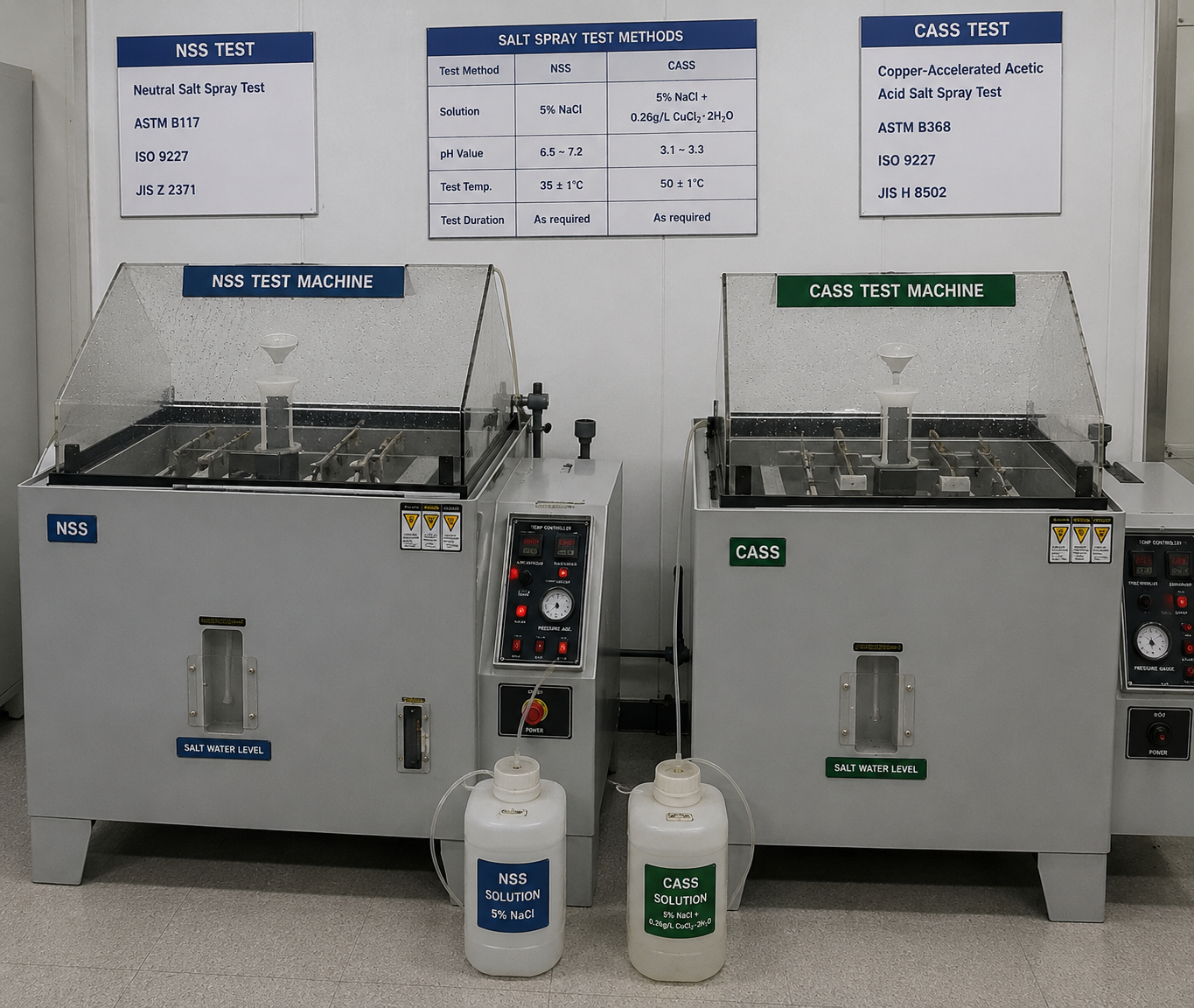
Salt spray expectations should identify the method, duration, sample condition and what counts as failure. Red rust, white corrosion, blistering, peeling or visible staining may be judged differently depending on the product.
Material and Geometry Matter
Sharp edges, welds, holes, threaded areas and contact points can behave differently during corrosion exposure. The factory should review these areas before confirming the surface treatment route.
Testing Is Not a Substitute for Process Control
A corrosion test can validate a finish, but daily quality still depends on cleaning, surface preparation, coating thickness, handling and packaging. Related reading: process capability vs final inspection.
What Buyers Should Include in RFQ
Include material grade, finish type, exposure requirement, test method, sample quantity, acceptance criteria and whether the test is needed for sample approval or every production batch.
Nbfeiyu Factory Angle
Nbfeiyu supports anodizing, electroplating, polishing, coating and e-coating coordination for OEM/ODM projects. Corrosion requirements should be reviewed together with Surface Treatment, packaging and final inspection.
Buyer Checklist
- Use environment is explained.
- Material grade and finish type are defined.
- Test method and duration are written.
- Failure criteria are agreed.
- Sample preparation is clear.
- Packaging protects finished surfaces after testing assumptions are met.
FAQ
Is a longer salt spray test always better?
Not always. The test should match product risk and application. Over-specifying can add cost without improving practical value.
Can corrosion testing replace coating thickness checks?
No. Corrosion testing and coating thickness checks answer different questions and may both be needed.
Should buyers test every batch?
It depends on product risk, buyer requirement and production history. Some projects use testing for validation and routine inspection for batch control.
Conclusion
For OEM buyers, the safest supplier is not the one that only promises inspection at the end. It is the factory that can explain how risk is reviewed, controlled and corrected before products leave the production line.
Clear drawings, practical standards and early engineering communication help both sides reduce rework, protect delivery schedules and keep repeat orders stable.