
Procurement teams usually see the finished quotation, sample or shipment. Inside a factory, the important decisions happen earlier: material review, process planning, tooling, inspection setup, assembly control and packaging confirmation.
This article takes a factory-side view of one practical issue that can affect OEM cost, delivery or warranty performance if it is left vague before mass production.
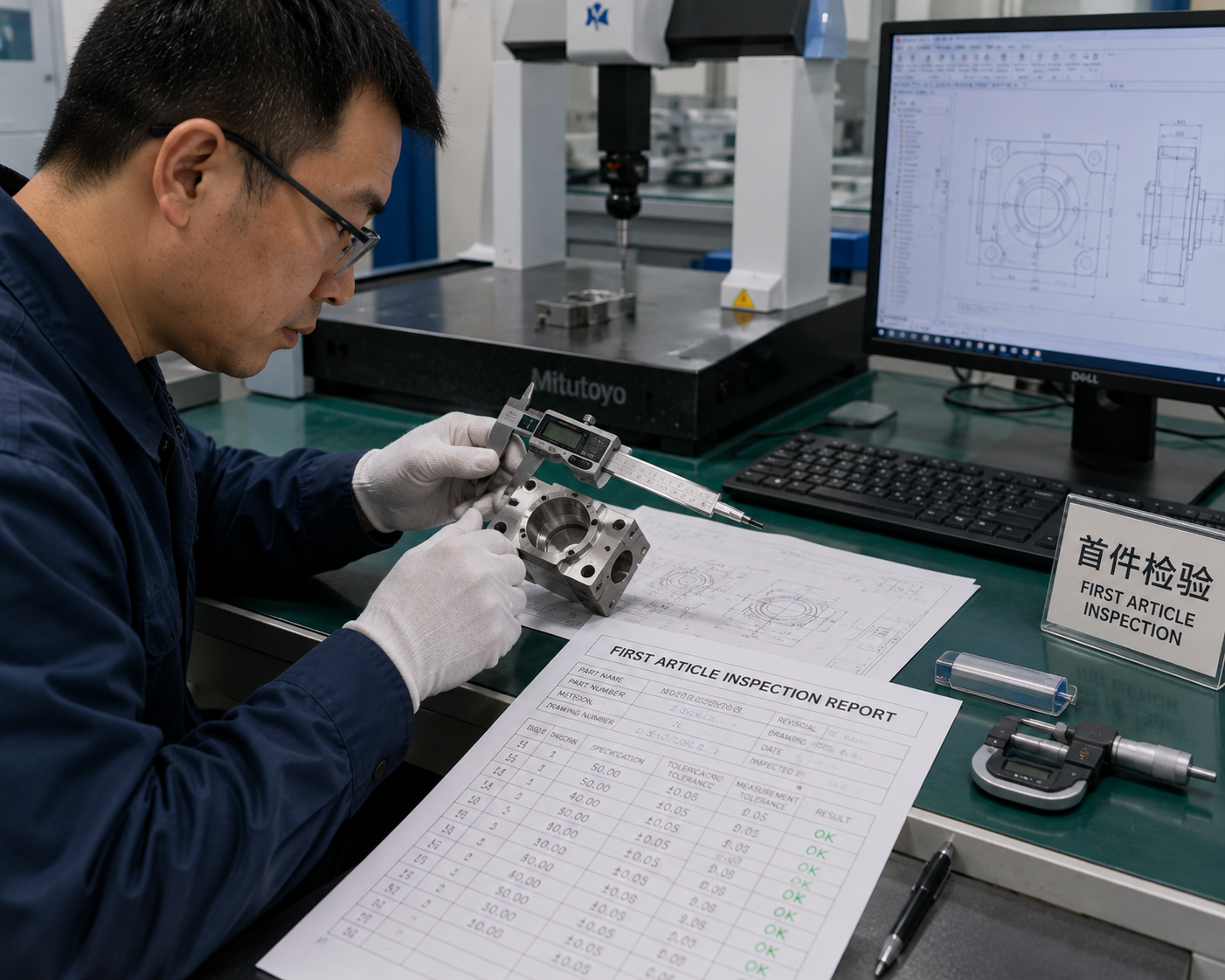
Quick Answer
Before releasing mass production, buyers should review pilot-run material, process route, actual cycle or assembly conditions, critical dimensions, functional checks, packaging and open corrective actions.
Factory Failure Case
A pilot sample was assembled by a senior technician who adjusted the parts by hand. The production line later used the standard work instruction and found that the fit was too tight. The sample proved that one person could make it work, but it did not prove that the process was repeatable.
A Pilot Run Should Use the Real Process
If the pilot uses different machines, fixtures, operators, inspection tools or purchased components from mass production, its evidence is weaker. Buyers should ask what was actually used.
Record What Changed During the Run
Tool offsets, deburring, assembly sequence, material lot and operator adjustments can matter. A short pilot report should show the changes and whether they are now controlled.
Fit and Function Need Line-Level Proof
The part should be checked using the intended fixture, mating component and work instruction. A hand-fitted sample can hide a production problem.
Open Problems Need Owners
A pilot can reveal issues without being a failure. The important point is to assign an owner, due date and release condition for every open item before mass production.
Packaging Belongs in the Release Decision
Carton quantity, labels, protection and handling should be tested before the first large shipment. Late packaging changes can affect both cost and delivery.
Nbfeiyu Factory Angle
Nbfeiyu uses engineering, production and quality teams to connect sample approval with repeat manufacturing. Buyers should request pilot evidence that reflects the real process, not only a polished sample.
Buyer Checklist
- Confirm the pilot used the intended process route.
- Review material, tooling and fixture records.
- Check fit using standard work conditions.
- List open issues with owners and deadlines.
- Approve inspection and packaging standards.
- Define the evidence required for mass-production release.
FAQ
Is a pilot run the same as a sample?
Not always. A sample may prove design intent, while a pilot run tests whether the intended production process can repeat the result.
How many pilot parts are needed?
It depends on risk, part complexity and process variation. The sample size should be enough to expose likely repeatability problems.
Can mass production start with open pilot issues?
Only when the open issues are documented, low risk or controlled by an approved temporary action. Critical fit or safety issues should block release.
Conclusion
The costliest OEM problems are often ordinary details that were not defined early enough. A better RFQ gives the factory enough information to control the process before parts reach final inspection.
For buyers, the goal is not to over-specify everything. It is to define the details that affect fit, function, appearance, repeatability and shipment risk.