
Quick Answer
For a small batch, confirm the current drawing, material or resin, first-piece result, critical dimensions, functional checks, finish, quantity, packaging, and shipment approval. The checklist works when each item has an owner and a record.
Factory Scenario
A small pilot batch was ready to ship, but the quality review found that the packing instruction still showed an earlier label format. The parts themselves matched the current drawing. The hold prevented a receiving problem because the warehouse expected the new part number and barcode structure.
The factory corrected the release process by adding document revision and label verification to the same checklist as inspection. The practical lesson was that a small order can expose administrative gaps faster than a long production run because there is less time to recover before the shipment date.
Start With the Release Package
Before checking the parts, confirm what the batch is supposed to be. The release package should identify part number, drawing revision, quantity, material, finish, approved sample, packaging standard, destination, and buyer-specific documents. A clear OEM shipment release package keeps production and receiving teams aligned.
For a small batch, do not assume that the last order is the correct reference. A recent drawing change, new label, revised finish, or different delivery destination can change the release requirements even when the geometry looks familiar.
Confirm the First Piece and Critical Features
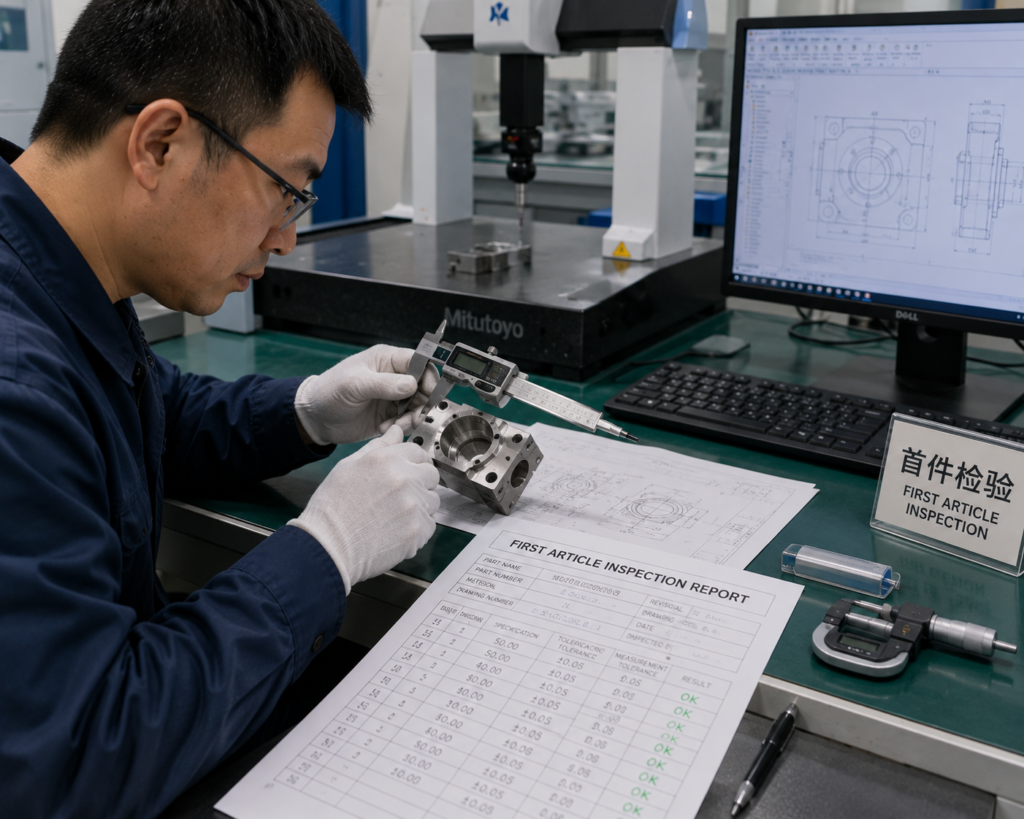
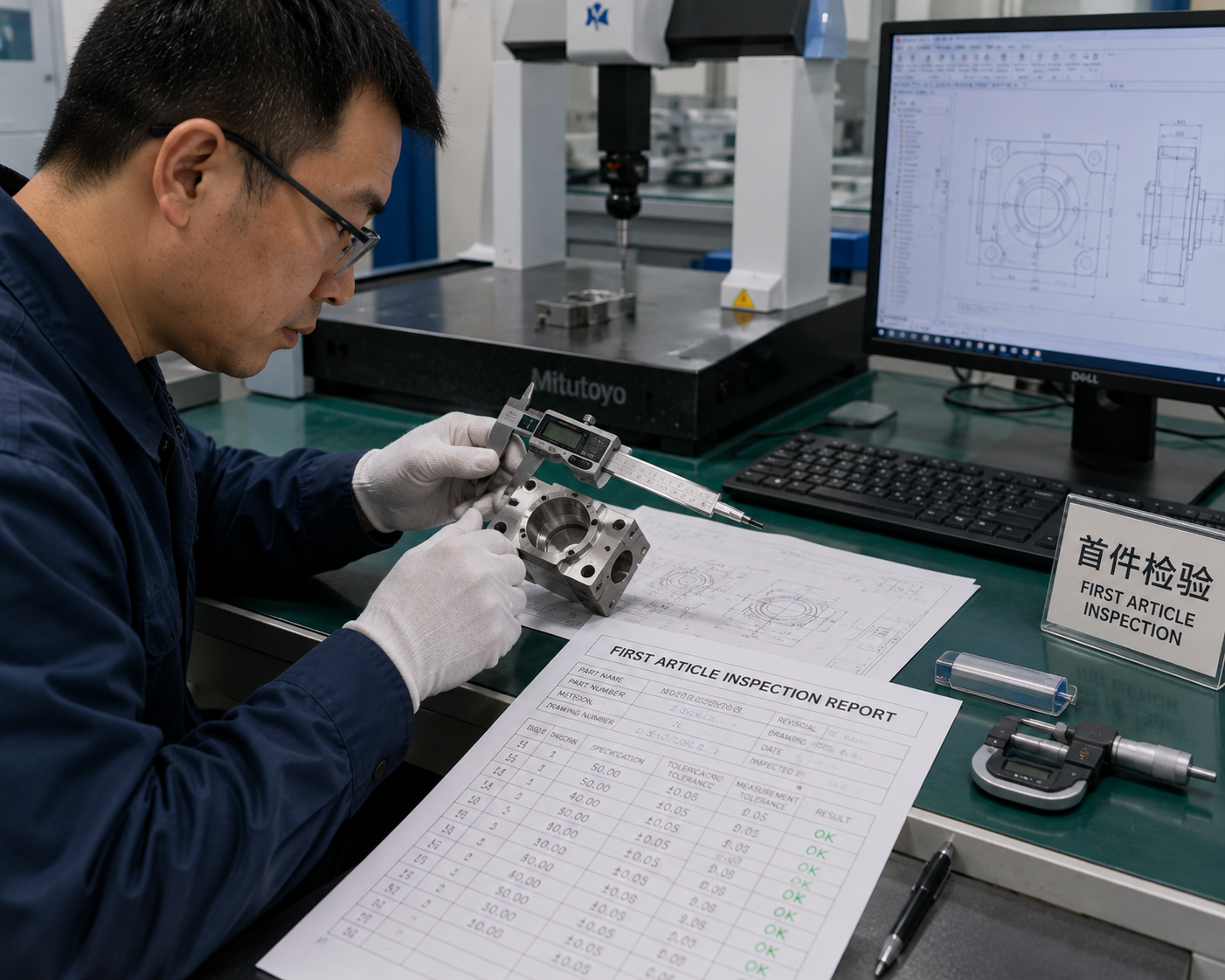
A first-piece check gives the factory a chance to catch a setup issue before the batch is completed. Use the current drawing and identify critical dimensions, interfaces, appearance areas, and functional tests. The first article inspection report should identify the inspected part, revision, method, result, and any deviation disposition.
Not every dimension needs the same attention. Focus the release checklist on features that affect fit, performance, safety, customer-visible appearance, or downstream assembly. The inspection record should still make it clear which features were checked and how.
Check Quantity and Identity Together
Count the accepted quantity after rework or sorting, not only the quantity produced. Keep accepted, held, and rejected parts separate. Confirm the part number and lot identity on the containers, inner packaging, and outer labels. This matters when a small batch is packed in several boxes or when partial quantities move through different inspection steps.
Barcode or label checks should be treated as a production control, not a shipping-office detail. A correct part with an incorrect identity can still create a receiving delay or a traceability problem.
Review Packaging and Shipment Approval
Packaging should protect the actual finish and geometry of the part. Check separators, bags, protective film, corrosion protection, carton quantity, marks, and destination instructions against the buyer requirement. If the part has a cosmetic surface, packaging contact points deserve the same attention as the part itself.
Shipment approval should record who reviewed the release package and when. The quality control system is more useful when it connects the inspection record, packaging check, and shipment decision to the same lot.
Buyer Checklist
- Confirm part number, drawing revision, material, finish, and quantity.
- Review the first-piece or pilot-run inspection record.
- Check critical dimensions, interfaces, appearance, and functional results.
- Separate accepted, held, and rejected parts before packing.
- Verify labels, barcode data, packaging quantity, and destination marks.
- Record shipment approval and retain the release package.
FAQ
Does a small batch need a first-piece review?
Usually yes when the part is new, changed, safety-related, customer-visible, or made after a setup change. The depth of the review can match the risk, but the decision should be documented.
Can a buyer skip the release checklist for a repeat part?
A repeat part may need fewer engineering checks, but revision, quantity, packaging, labels, and shipment approval still need confirmation. These are common sources of avoidable receiving problems.
Who should own the final release?
The buyer and factory should agree in advance. Quality may prepare the evidence, while the buyer, engineering, or designated quality authority makes the acceptance decision.
Conclusion
A small OEM batch needs a clear release path because one avoidable mistake can delay receiving just as easily as a problem on a larger run. A short, traceable checklist connects the approved design to the parts, packaging, and shipment decision.
Need a Small-Batch OEM Release Review?
Send the part list, current drawing revision, quantity, inspection requirements, packaging standard, and delivery destination. Nbfeiyu can help organize the release checks before the batch leaves the factory.