
Buyers see the quotation and finished part. Factory teams manage the less visible decisions that determine whether the result stays stable through repeat production.
Quick Answer
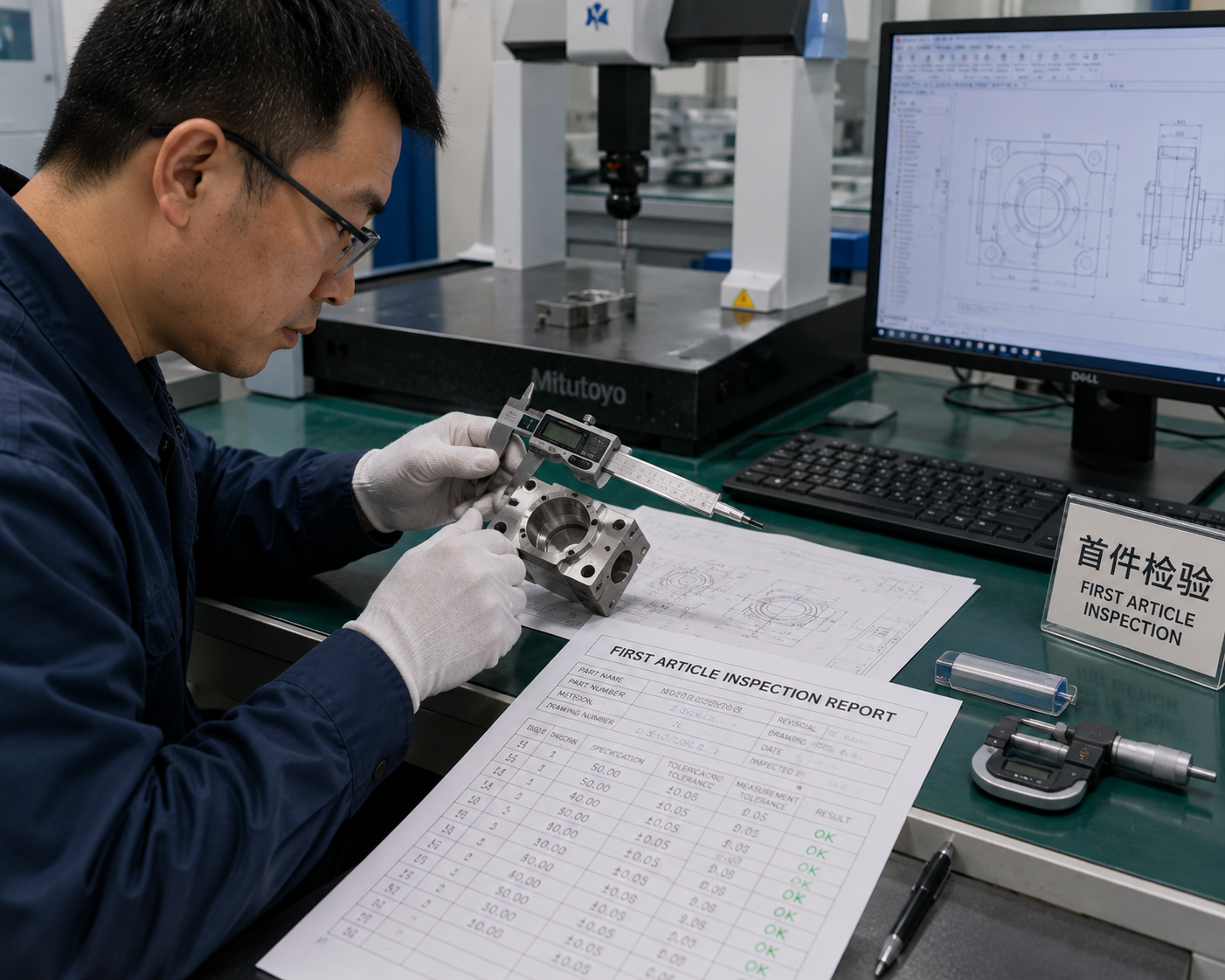
Use first-piece approval after setup changes, shift changes, tool changes or material changes when the feature risk justifies it. The approval should confirm the current part, revision, process and measurement method.
The Setup Was Stable Until the Next Shift
A line completed a good run, then the next shift adjusted the fixture position to improve access. Output continued, but the locating relationship changed slightly. A first-piece check at the handover would have caught the change before more parts entered the batch.
Treat Handover as a Process Event
A shift change is not only a staffing event. The line may also change tools, settings, fixtures, work instructions or inspection responsibility.
Confirm the Features That Can Move
Check locating holes, datums, critical thickness, fit surfaces and any characteristic affected by the setup. The list should come from the process risk, not from habit.
Keep the Approval Near the Line
The operator and inspector should be able to identify the approved first piece and the active revision. A report stored far from production is difficult to use during a handover.
Define the Reaction to a Failed First Piece
Hold the output since the last known-good check, identify the cause and re-approve the process. Continuing while the team discusses the issue creates traceability trouble.
Nbfeiyu Factory View
With quality staff assigned across production lines, Nbfeiyu can connect first-piece approval to machining, molding, assembly and final inspection decisions.
Buyer Checklist
- Define when first-piece approval is required.
- Confirm the active drawing revision and work instruction.
- Check setup-sensitive critical features.
- Identify the approved first piece and time.
- Hold affected output after a failed check.
- Record the person responsible for release.
FAQ
Is first-piece approval the same as final inspection?
No. It approves the current setup early in the run; final inspection confirms completed output against the acceptance plan.
Does every shift need a full dimensional report?
Not necessarily. The check can focus on risk-critical features when the process and sampling plan support that decision.
What should happen after a tool change?
The factory should assess which features may have changed and repeat the relevant first-piece approval before continuing.
Conclusion
A production line can make an acceptable first piece at the start of a shift and still need another approval after a setup, tool or operator change. Early agreement gives engineering, production and quality teams a clear basis for action.
Need Help With This OEM Project?
Send the drawing, critical features and handover requirements. Nbfeiyu can help define a practical first-piece release process for repeat OEM production.