
Quick Answer
Send the part number and drawing revision, the exact requirement, observed result, inspection method, sample size, known affected quantity, clear photos, and the shipment or lot reference. Keep representative physical samples when possible. Ask the supplier to confirm containment of work in process and finished stock, name an owner, and propose a response date. Separate verified facts from assumptions about cause or responsibility.
Factory Scenario: “The Holes Are Off” Is Not Enough
Consider an illustrative receiving problem: a bracket will not align with the mating part. A phone photo shows the mismatch, but the supplier does not know whether the issue is hole location, bracket orientation, a wrong revision, assembly sequence, or a fixture difference. If the buyer sends only the photo, the supplier may investigate the wrong feature.
The evidence packet should let both sides reproduce the question. Include the datum scheme or relevant drawing view, the actual measurement or fit check, the method used, and photos showing part identity and orientation. This is a teaching scenario, not a documented Nbfeiyu customer failure.
The Minimum Evidence Packet
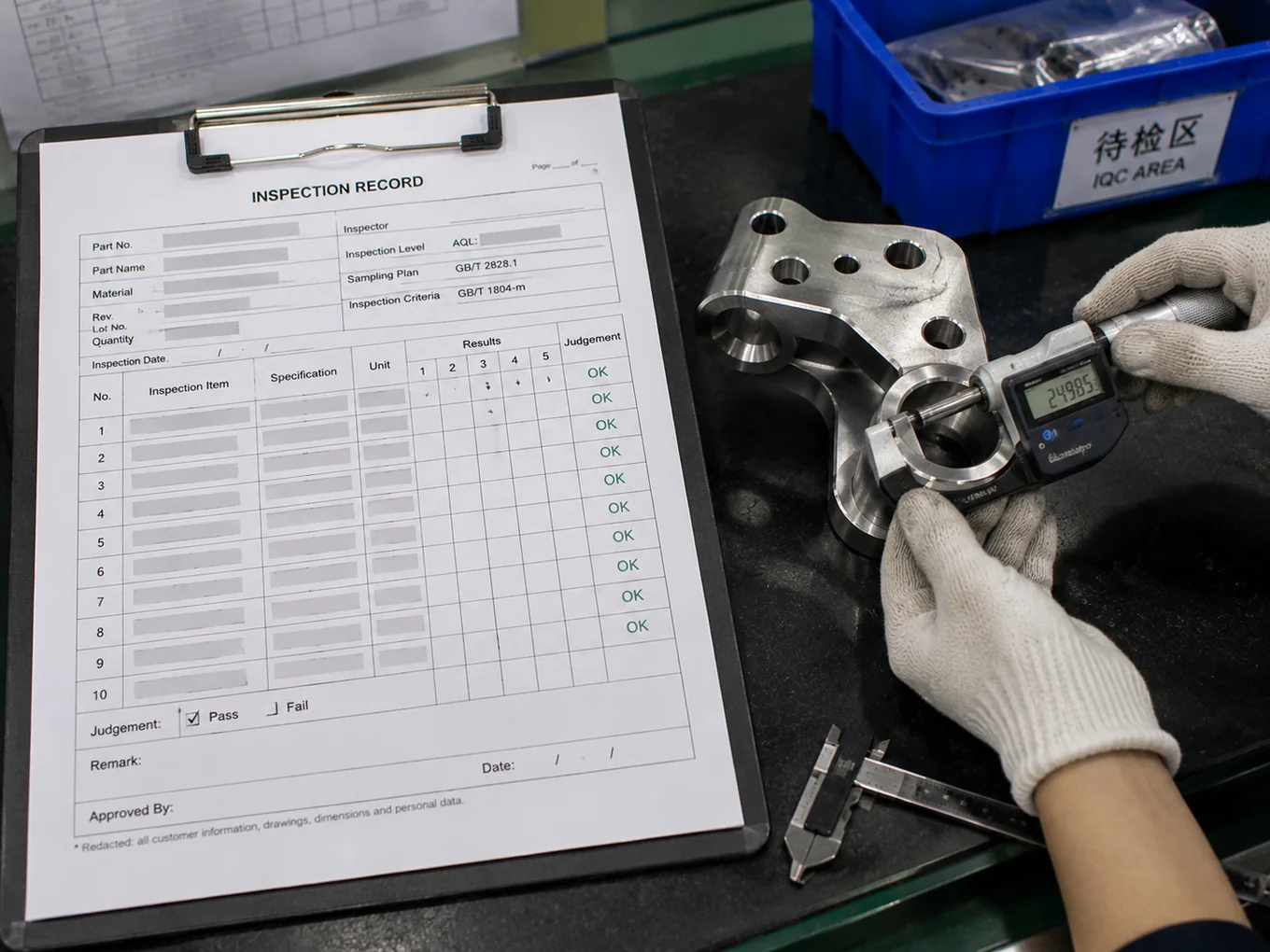
1. Identity: part number, description, drawing revision, purchase order, shipment reference, lot/date code, and carton label. 2. Requirement: the exact dimension, finish, material, function, packaging, or workmanship requirement and its source document. 3. Observed condition: measured result, visual defect description, functional symptom, or assembly location. State units and method. 4. Scope: inspected sample size, number that failed, quantity not yet inspected, and any stock already used or shipped. 5. Evidence: clear overview and close-up photos, scale or gauge reference where appropriate, inspection records, and sample availability. 6. Requested action: hold the affected stock, confirm containment, provide a technical owner, and propose investigation and recovery timing.
Make Photos and Measurements Useful
Take one image that identifies the part and orientation and another that shows the specific condition. Include a ruler, gauge, or reference feature only when it helps explain the measurement; avoid perspective distortion. For a dimensional claim, report how the feature was measured and the instrument or fixture used. If the result is near the tolerance boundary, consider whether measurement variation or setup differences need a joint method review before declaring a batch nonconforming.
For cosmetic issues, use consistent lighting and viewing conditions, mark the affected area, and compare with the approved sample or visual standard. “Looks bad” is difficult to act on unless the buyer defines the viewing distance, surface zone, defect type, and acceptance boundary.
Protect Samples and Chain of Custody
Keep at least one failed sample and, if available, one conforming comparison sample. Label each with date, lot, inspection status, and who handled it. Do not grind, repair, or discard the only failed example before the supplier has had a reasonable opportunity to review it. If the sample must move, photograph it before packing and record the tracking reference.
Buyer Checklist
- Can another inspector identify the same requirement from your notice?
- Did you provide the correct revision and part orientation?
- Are actual results tied to a stated method and sample count?
- Is the affected scope separated from uninspected quantity?
- Have you requested containment without presenting an unverified root cause as fact?
- Are the sample, photos, and records preserved until disposition is agreed?
See quality control for inspection and documentation context, and the OEM/ODM workflow for how project requirements move through review and production. For multi-part products, use assembly and supply-chain support to frame the affected interface. Buyer references are on Manufacturing Resources; project questions can go to Contact / RFQ.
FAQ
Should I send every defective part back immediately?
Not before the supplier confirms the return scope and the shipment route is agreed. Preserve representative samples and obtain written instructions first.
What if I do not know the affected quantity yet?
Say so. Report the verified failed count, inspected quantity, and uninspected balance separately, then define how containment will establish the remaining scope.
Should I tell the supplier what caused the defect?
Share evidence and a suspected cause only when clearly labeled as a hypothesis. Root cause should follow investigation, not precede it.
Conclusion
A strong complaint is specific enough to investigate and neutral enough to keep the facts credible. Clear evidence shortens the time spent debating what happened and gives both teams a better basis for containment and recovery.
Need a Manufacturing Review?
Share the drawing revision, inspection evidence, quantity, and required next step. Nbfeiyu can review the manufacturing information for an OEM part or assembly.